Short answer
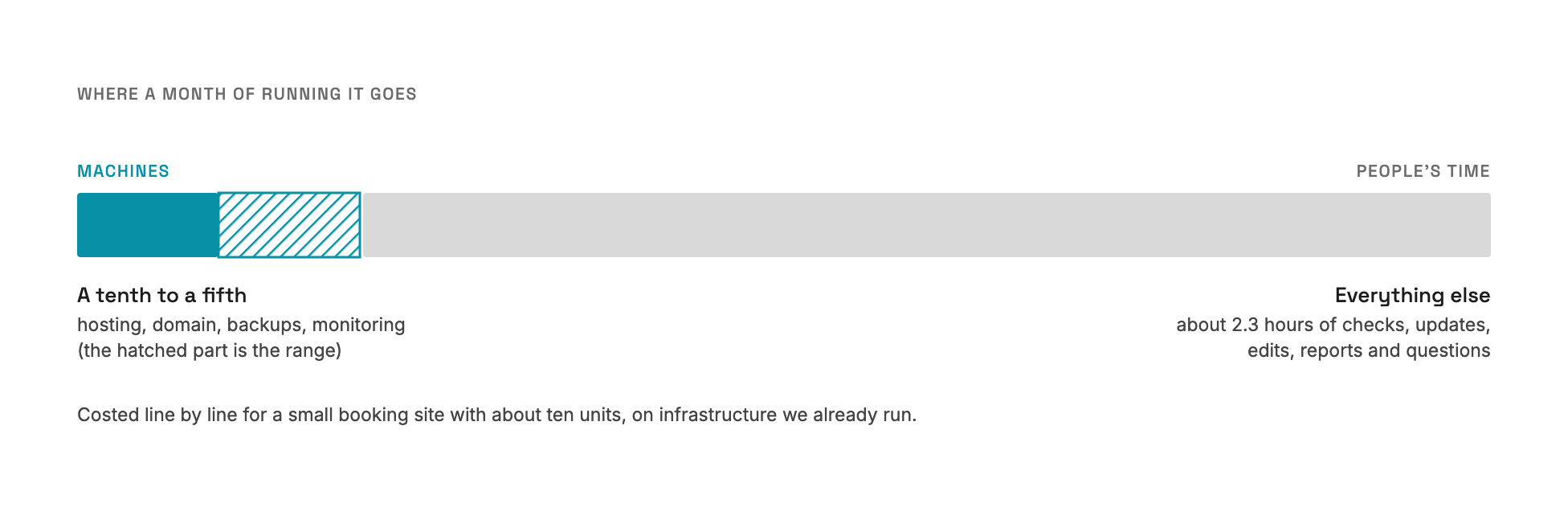
For a small platform, hosting is usually the cheapest part of running it. When we costed a month of running a small booking site line by line, servers, domain, backups and monitoring came to between a tenth and a fifth of the total. The rest was about 2.3 hours of people's time: checking it, updating it, reporting on it and answering questions.
A common question we hear is some version of: "Hosting is a few dollars a month. Why does a care plan cost more than that?" It is a fair question, so here is the honest answer, from a real costing we did.
What we costed
The platform was a direct-booking website for a property owner: about ten units, calendars synced from the booking sites the owner already used, and a private login for the owner to edit listings and prices. A modest system, running on shared infrastructure we already operate.
We listed everything it would take to keep it running for one month, with nothing new added.
Where the month goes
The machines (a tenth to a fifth of the total):
- A share of hosting on infrastructure that is already running
- Domain, security certificate, content delivery, an uptime monitor and daily backups
- Calendar syncing every 30 minutes, which costs almost nothing in computing
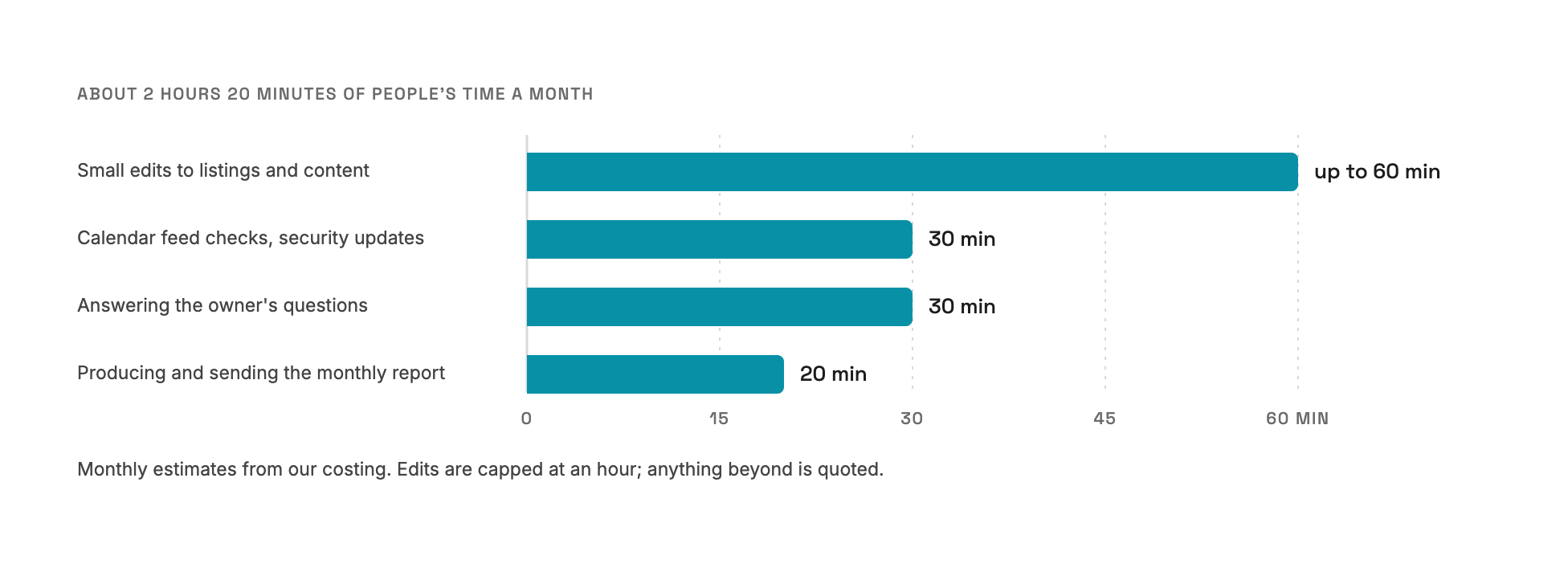
The people (everything else), about 2.3 hours a month:
[ IMAGE PENDING · 02-hours-breakdown ]
| Task | Time a month |
|---|
| Producing and sending the monthly report | about 20 minutes |
| Checking the calendar feeds, applying security updates | about 30 minutes |
| Small edits to listings and content | up to 1 hour |
| Answering the owner's questions | about 30 minutes |
None of these tasks is large. Together they are most of the cost, and they are the part that is easy to forget when a project is quoted.
Why the small tasks matter
Skip them and nothing breaks on day one. Then a calendar feed stops syncing and a unit gets double-booked. A security update waits for three months. A price change sits in someone's inbox. The owner finds out from a guest.
Running software is mostly noticing things before the customer does. That takes a person's attention every month, even when nothing goes wrong.
What we learned
1. Quote the time, not the server. Hosting is visible and cheap, so it anchors the conversation. The real cost is a few hours of attention a month, and it should be named up front.
2. Put a cap on the edits. "Small edits" grow if nobody counts them. A monthly cap, with anything beyond it quoted, keeps the arrangement fair for both sides.
3. Check it in month three. Our estimate was a plan. After a few months of real use, compare it with the hours actually spent and adjust.
4. Let the owner do the routine things. Giving the owner a login to change prices and photos themselves cut the edit time we had to budget for.
Who this is for
- Owners comparing a care plan with a hosting bill, and wondering where the difference goes.
- Anyone budgeting for software after launch, not just for the build.
This is why our monthly Care plans are priced around hours of work, not servers. There is more on why a first version costs what it costs on our pricing page.